
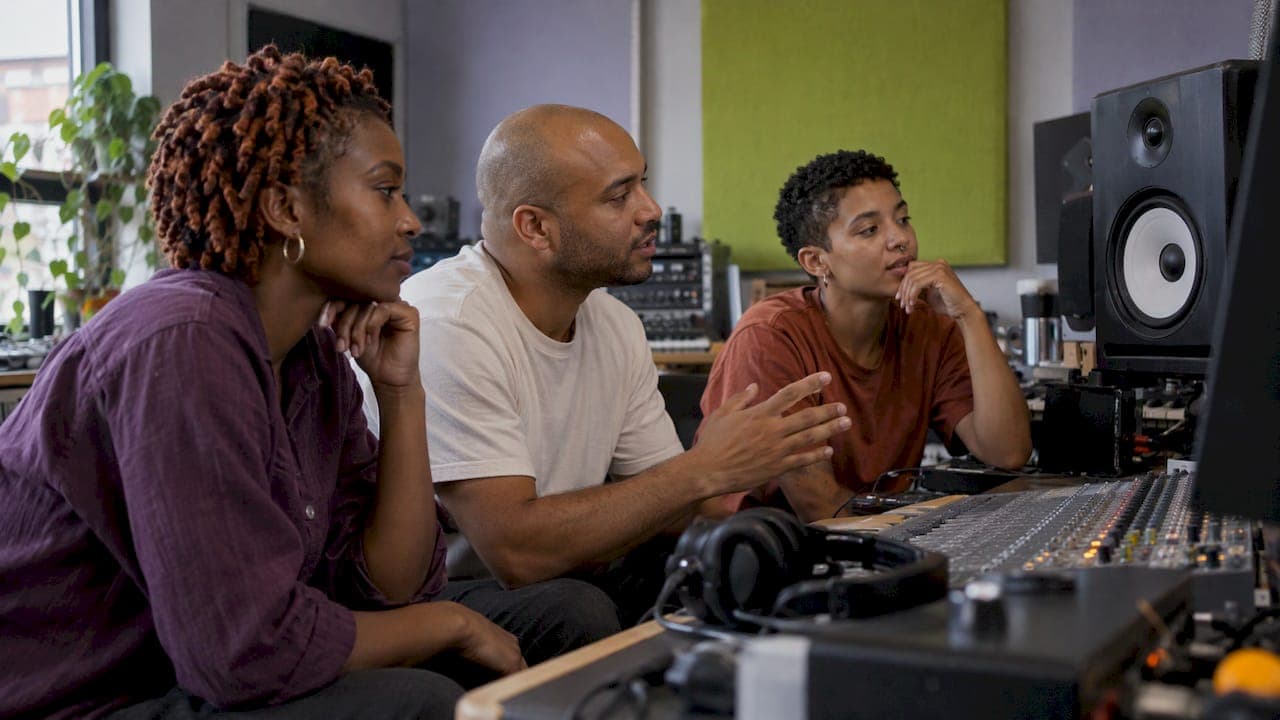
To connect with artists directly, go where the music is played and the artist is present: a platform where they upload their own tracks, talk to listeners and share the moment with them. Comment sections and follower counts won't get you there. If you're a fan, that means joining listening spaces and showing up consistently. If you're an artist, it means releasing music where listeners can react together and answer back. This guide covers both sides, step by step.
TL;DR
- Direct connection works when the artist and listener share the same moment, such as a live listening session, and not only when they follow each other.
- Fans can start by listening in groups, trading queues with friends and joining artist-led sessions. Artists can upload tracks straight to listeners and invite feedback.
- Digital platforms give artists a direct line to audiences and let fans support them from almost anywhere, according to Music In Africa.
- Before you join anywhere, check who owns uploaded music, who can see your activity, how moderation works and what is free versus paid.
- Sndbox is built around synced group listening and direct artist uploads. You can see how it works.
Table of Contents
- What "directly" actually means
- The main kinds of artist-to-listener platforms
- How fans can connect with artists directly
- How artists can build a community with listeners
- What friends get out of listening together
- What to check before you join any platform
- Perspective
- Try it with your own group
- A simple first month plan
- FAQ
- Sources
What "directly" actually means
Most of what you find when you search this topic is about artists networking with other artists: swapping links in comment threads, visiting studios, building a contact list. That is useful, but it is a different problem from the one a fan or an emerging musician faces.
The direct connection we're talking about runs between an artist and the people who actually listen. It has three parts:
- No gatekeeper between the song and the ear. The artist puts the track in front of listeners without waiting for a playlist slot or a label.
- A place to respond. Listeners can react while the music plays, not three days later in a comment that gets buried.
- Repeated contact. One chat is a moment. A recurring room, a returning group of listeners and a familiar face are what turn a moment into a community.
If a platform delivers all three, you have a real artist-to-listener connection. If it delivers only the first, you have a very efficient broadcast channel.
The main kinds of artist-to-listener platforms
Platforms that let artists reach listeners without much in between tend to fall into a few types. Knowing the type helps you pick the right one for what you want.
| Type | How the connection happens | Best for |
|---|---|---|
| Fan-support and membership spaces | Fans pay or subscribe to unlock extras such as exclusive messaging, early music or behind-the-scenes material | Artists with an existing audience who want to reward their most loyal fans |
| Social media and short video | Artists post clips and reply in comments or direct messages | Reach and discovery, with less depth per listener |
| Messaging communities and group chats | Artists host a channel for fans to talk with them and each other | Ongoing conversation, but music is played elsewhere |
| Synced listening platforms | Everyone hears the same track at the same moment, with shared queues and live reactions | Shared experience, group discovery and real-time feedback |
The fan-support model is well documented. Music In Africa reported in 2022 that one major streaming platform's supporters feature let fans buy support badges for songs or albums and unlock exclusive direct messaging with the artist. The same report says artists could use that access to share early music, merchandise or behind-the-scenes material. It also reported that more than half of independent artists using the feature had increased their earnings by at least 30% through direct fan contributions. Treat that as the claim of one platform's program at one point in time, but it shows what artists are looking for: a way to be supported by the people who actually care about the music.
There is also a broader shift happening. In a 2025 piece on streaming alternatives, The Guardian quotes the chief executive of one new music company saying the future of music is increasingly independent, with artists looking for curation-focused alternatives to algorithm-driven streaming. The takeaway for a fan: you have more choice than ever about where you listen, and the places that put people first are growing.
How fans can connect with artists directly
If you're a listener, the goal is to stop being an anonymous play count. Here is a practical sequence.
Step 1: Listen where the artist can be present
A stream on a catalog app is a private act. A session where the artist uploaded the track and can see you listening is a shared one. Look for spaces where artists publish directly to listeners, so the person who made the song is part of the room.
Step 2: Bring friends
Artists notice rooms with energy. A group of friends who listen together, react to the same drop and trade queues produces exactly the kind of activity that makes an artist want to stay and talk. Our guide to setting up a music listening room walks through how to run one with friends, from choosing a first track to keeping the queue fair.
Step 3: React specifically
"Love this" is fine. "The second verse where the bass drops out gave me chills" is something an artist remembers. Specific reactions start conversations, and artists tend to answer the people who tell them what landed.
Step 4: Come back
One visit makes you a face in the crowd. Three visits makes you a regular. Artists who are building something recognize regulars quickly, and regulars get early access to unfinished work, which is where the closest connections form.
Step 5: Share what you find
When you add an artist's track to a friend's queue, you are doing the artist a favor that no ad can match. It also gives you something to talk about with the people you listen with.
How artists can build a community with listeners
If you're the one making the music, the same principle holds: be where the listening happens, and be a person, not a feed.
Upload straight to listeners
The fewer steps between your track and a listener's ears, the better. Direct uploads let you release when you're ready, test a rough mix with a small group, or drop something unannounced for the people who showed up.
Host listening sessions, not only releases
A release is a single event. A session is a habit. Invite listeners to a recurring slot, play the new track, then play the music that shaped it. Ask what they would queue next. You learn what your audience actually likes, and they learn who you are.
Share the process
People bond with unfinished work. Fan-oriented tools commonly center on this kind of access: early songs, behind-the-scenes material and exclusive conversation, as the Music In Africa report describes. Demos, alternate takes and stories about how a song came together give listeners a reason to keep returning.
Keep a simple rhythm
Pick a cadence you can sustain: a session every two weeks, a new track on the first of the month, a standing hour on a weekday evening. Consistency matters more than scale. Ten people who come every time are worth more than a thousand who clicked once.
Ask for something small
Good community requests are easy to answer: "Which of these two mixes feels better?" or "What should I play after this?" Small asks build the habit of replying.
What friends get out of listening together
Sharing music has always been social: the mixtape, the car ride, the record played at a party. Streaming made it private. Synced listening brings it back. When everyone hears the same note at the same second, reactions line up, jokes land and discovery becomes collective.
Three habits make group sessions work:
- Trade queues. Each person adds songs in turn, so no single taste dominates and everyone gets surprised.
- Give every session a theme. Songs from 2005, tracks under three minutes, the first album you ever owned. Constraints make people dig deeper.
- Leave room for the unknown. Reserve one slot per session for a track nobody in the room has heard. That is where new artists get discovered.
Add a direct artist upload to that mix and a session turns into something more than a playlist: you are hearing a song from the person who wrote it, with people whose reactions you can see.
What to check before you join any platform
A good connection is built on trust. Before you commit time or music to a new space, check these four things.
Music rights
If you're an artist, read the terms on what you grant when you upload. Every song carries two separate copyrights: the musical composition (music and lyrics) and the sound recording, and in most cases they are registered separately with the U.S. Copyright Office. Know which rights you are licensing, whether the license is exclusive and how you can remove a track. Uploading a cover or a sample you don't have permission for can create legal trouble, so upload only what you own or are cleared to share. For specific questions about your own catalog, a music attorney is the right professional to ask.

Privacy
Check what other users can see: your listening history, your username, your friend list. Prefer platforms that let you control whether a session is open or invite-only, and that let you listen without exposing your real name.
Moderation
Live rooms need house rules. Look for clear community guidelines, a way to report a user and a way for a host to remove someone. Artists should be able to set the tone of their own sessions.
Costs
Find out what is free and what is paid before you invest. Some spaces charge fans for extras such as messaging access, and some charge artists for enhanced community tools. Whatever the model, you should be able to see what you get for your money on the platform's own pages.
Perspective
We built Sndbox on one belief: music is better when someone is listening with you. Streaming made listening efficient, but it also made it lonely. You press play alone, you skip alone, and the artist on the other end never knows you were there.
We think the fix is simple to describe. Put people in the same moment. Sync the playback so friends hear the same beat together. Let them trade song queues so everyone's taste gets a turn. And let artists upload tracks directly to listeners, so the person who made the song is part of the room, not a name on a screen.
That is why we focus on group engagement and not just on a bigger catalog. A catalog tells you what exists. A shared session tells you what it feels like. When an artist can drop a track into a room full of people who are listening together, the feedback is immediate and the relationship starts on honest ground.
We also want to make it easier for artists to create. Our virtual studio is designed so an artist can record new tracks without booking an actual recording studio, then share them with listeners right away. Making and sharing sit in one place, and that shortens the distance between an idea and the first person who hears it.
sndbox.fm
Try it with your own group
Sndbox is a music platform for real-time synced listening with friends, collaborative song queue trading, social discovery and direct track uploads from artists to listeners. If you're a fan, you can start a session with friends and discover new music together. If you're an artist, you can upload tracks straight to listeners and use the Sndbox virtual studio to record new material without a physical studio.

You can explore Sndbox and see how the features fit your group or your release plan.
A simple first month plan
If you want a concrete way to start, use this.
For fans
- Week 1: Pick two or three friends and run a synced session with a shared queue.
- Week 2: Add one track from an independent artist you have never heard.
- Week 3: Join an artist's session and react specifically to one moment in a song.
- Week 4: Host a themed session and invite someone new.
For artists
- Week 1: Upload one finished track directly to listeners and say a few words about it.
- Week 2: Host a short listening session and ask which of two mixes people prefer.
- Week 3: Share a demo or an alternate take with the people who came back.
- Week 4: Announce a recurring slot so regulars can plan around it.
At the end of the month, count the people who returned, not the people who visited once. That number tells you whether a real community is forming.
FAQ
What is the best way to connect with an artist directly?
Be present where the artist shares their music, and be specific and consistent. Join live or synced listening sessions, react to particular moments in songs and return regularly. Artists respond most to people they recognize.
Do I have to pay to talk to artists?
Not necessarily. Many spaces let you listen and chat for free, while some platforms charge for extras such as exclusive messaging, as one supporters feature described by Music In Africa did. Check each platform's own page to see what is free and what is paid.
How can artists get listeners to engage instead of just streaming?
Give them something to do together. Host recurring listening sessions, share demos and ask small questions such as which mix people prefer. Direct uploads and live rooms make replying easy.
Is it safe to upload my music to a new platform?
Read the terms first. Check which rights you grant, whether the license is exclusive and how to remove a track. Remember that a song's composition and its recording are separate copyrights, so a music attorney can help with questions about your own catalog.
Can friends discover new music together without a big catalog?
Yes. Trading queues in a synced session brings in everyone's taste, and adding a track from an independent artist gives the group something new. Our listening room guide shows how to set one up.
Sources
- Op-ed: Fostering the artist-fan relationship in the digital world, Music In Africa
- Will a new generation of streaming companies change music? The Guardian
- Circular 50: Copyright Registration for Musical Compositions, U.S. Copyright Office